
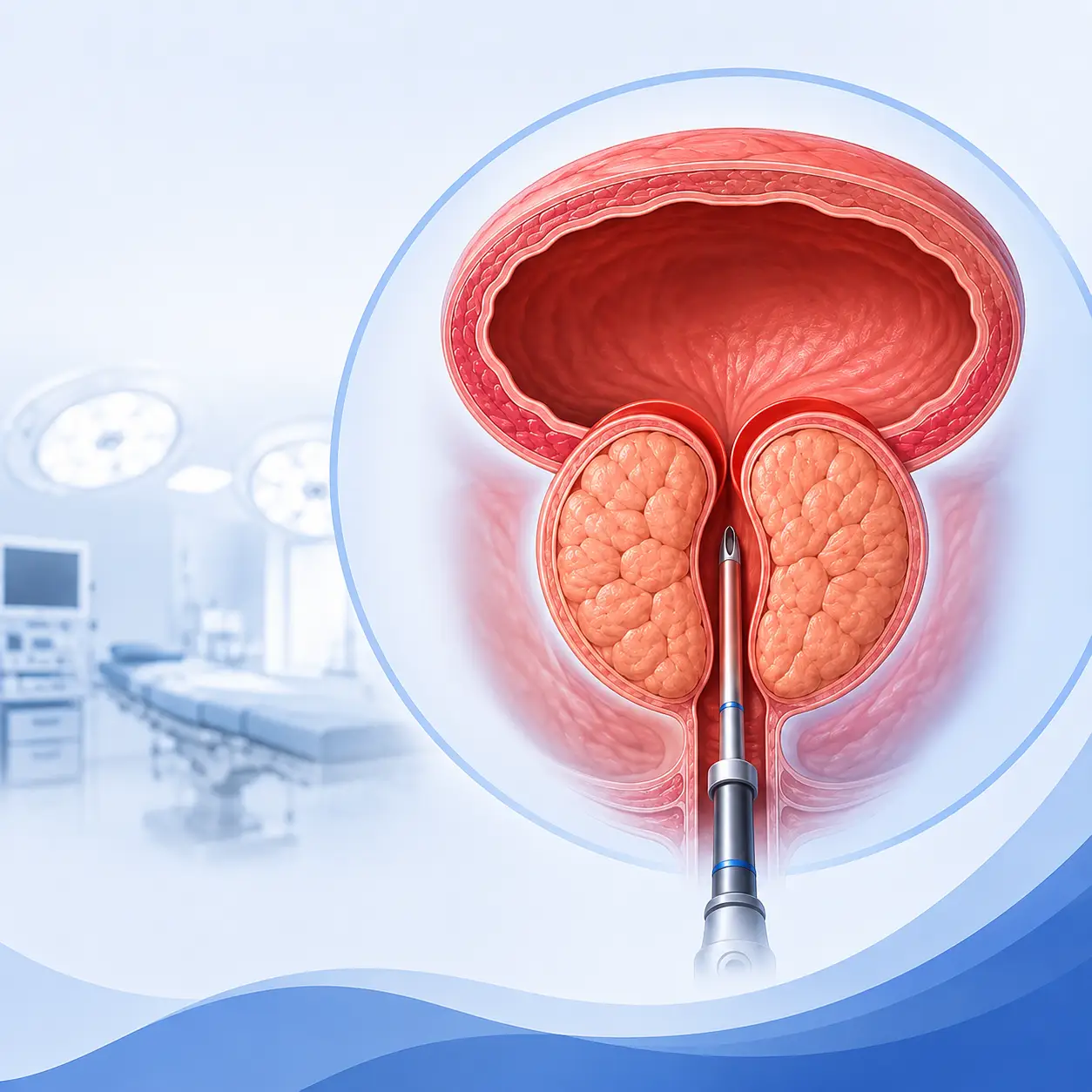
Prostate surgery is typically recommended for benign prostatic hyperplasia (BPH) that hasn’t responded well enough to medication, or as part of treatment for prostate cancer, depending on the stage and grade of the disease.
Prostate Surgery in Pune
Dr. Rajesh Dhake > Prostate Surgery
Why Prostate Surgery Is Performed
Prostate surgery is commonly performed for two main reasons:
- Benign Prostatic Hyperplasia (BPH) — a nonmalignant, noncancerous enlargement of the prostate gland, common in older men, where surgery relieves the blockage it causes
- Prostate cancer — where surgical removal of the gland is part of the treatment plan, depending on stage and grade
Signs and Symptoms That May Point to Prostate Surgery
- Weak urine stream that gradually starts and stops
- Nocturia — increased frequency of urination during the night
- Frequent daytime urination
- Difficulty starting or stopping urination
- A feeling of incomplete bladder emptying
- Symptoms that tend to worsen gradually over time
How the Need for Surgery Is Diagnosed
- Urodynamic and pressure flow studies — measures bladder pressure and how efficiently the bladder muscles are functioning
- Cystoscopy — examines the bladder and urethra directly using a scope, done under local anesthetic
- Prostate biopsy — checks for signs of prostate cancer when malignancy needs to be ruled out or confirmed
These tests together determine whether the cause is BPH, cancer, or another prostate-related condition, and guide which surgical approach makes sense.
Prostate Surgery Treatment Options
- Minimally invasive procedures — reduce prostate tissue with smaller incisions, less bleeding, and faster recovery compared to traditional open surgery
- Laser-based procedures (such as HoLEP) — use laser energy to remove excess prostate tissue blocking the urethra, with a lower risk of bleeding than conventional resection
- Robotic-assisted prostatectomy — offers precision and improved nerve-sparing for prostate cancer cases, helping preserve urinary and sexual function
- Traditional open or transurethral surgery — used in select cases depending on prostate size, patient health, and the specific condition being treated
Why Choose an Experienced Surgeon
- Complex prostate conditions require a nuanced, individualized surgical approach
- Recovery speed and quality of life afterward depend heavily on surgical precision and technique
- An experienced urologist can match each patient to the least invasive option that will still achieve a good outcome
- Access to advanced technology, such as robotic and laser-based systems, matters as much as surgical skill
What Recovery Looks Like
- Most minimally invasive procedures involve a shorter hospital stay than open surgery
- Mild discomfort and temporary catheter use are common in the days following surgery
- Recovery time varies by the specific procedure performed, from a few days to a few weeks
- Following your surgeon’s post-operative instructions closely supports a smoother recovery
When to Consult a Urologist About Prostate Surgery
- Urinary symptoms that are worsening or disrupting daily life or sleep
- A diagnosed prostate condition where medication hasn’t provided enough relief
- A confirmed or suspected prostate cancer diagnosis
- Recurrent urinary retention or difficulty emptying the bladder
Prostate surgery consultations are available across Wakad, Baner, and Pimple Saudagar, open all days except Sunday.
Frequently Asked Questions
When is prostate surgery necessary?
What tests are done before prostate surgery is recommended?
Common tests include urodynamic and pressure flow studies to assess bladder function, cystoscopy to examine the bladder and urethra, and a prostate biopsy if cancer needs to be ruled out or confirmed.
What is the difference between minimally invasive and traditional prostate surgery?
Minimally invasive procedures, including laser-based techniques, use smaller incisions or none at all, generally resulting in less bleeding, less pain, and a faster recovery compared to traditional open surgery.
Does robotic prostate surgery affect sexual function?
Robotic-assisted prostatectomy is designed to improve precision and support nerve-sparing techniques, which helps preserve urinary and sexual function better than some traditional surgical approaches, where the cancer’s spread allows it.
How long does recovery take after prostate surgery?
Recovery time depends on the specific procedure — minimally invasive options generally allow a quicker return to normal activity, often within days to a couple of weeks, compared to a longer recovery after open surgery.
What are the common symptoms that may indicate the need for prostate treatment?
Common symptoms include frequent urination, difficulty starting urination, weak urine flow, urgency, getting up frequently at night, and a feeling of incomplete bladder emptying.
How is the right prostate surgery selected?
The choice of procedure depends on the prostate size, symptoms, overall health, medical history, and the underlying condition. Your urologist will recommend the most suitable option after evaluation.
Is prostate surgery performed under anaesthesia?
Yes. Prostate surgery is generally performed under appropriate anaesthesia, depending on the type of procedure. Your doctor will explain the anaesthesia and procedure beforehand.
Can prostate surgery improve difficulty in urination?
For patients whose urinary symptoms are caused by an enlarged prostate, appropriate surgery can help improve urine flow and bladder emptying.
What should I expect after prostate surgery?
Some temporary urinary symptoms may occur during recovery. Your doctor will provide instructions regarding medicines, activity, hydration, follow-up appointments, and when you can return to your normal routine.
