
Two or more within six months, or three or more within a year. At that point, it’s treated as its own condition with a focus on finding the underlying cause.
Recurrent UTI Treatment in Pune
Dr. Rajesh Dhake > Recurrent UTI Treatment
What Is a Recurrent UTI?
A UTI is classified as recurrent when it happens:
- Two or more times within 6 months, or
- Three or more times within 1 year
At this point, it’s treated as its own condition rather than a series of unrelated infections.
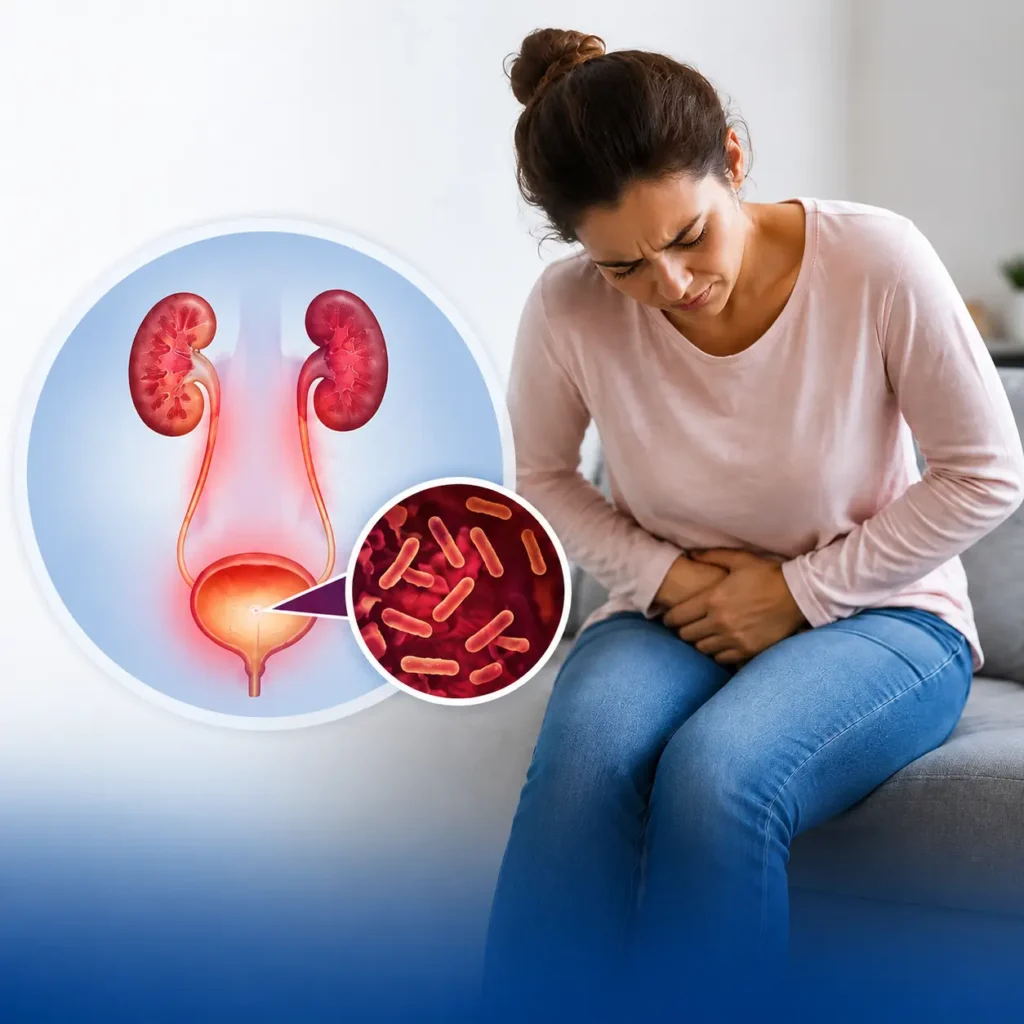
Why It Happens
- Incomplete bladder emptying, leaving stagnant urine where bacteria multiply
- Structural issues such as kidney stones or an enlarged prostate blocking normal flow
- A weakened immune system from certain conditions or medications
- Shorter female anatomy, giving bacteria a shorter path to the bladder
- Sexual activity introducing bacteria into the urethra
- Menopause, where declining estrogen thins the vaginal and urethral lining
- Repeated antibiotic use, which can encourage resistant bacteria over time
Signs and Symptoms
- Frequent, urgent need to urinate
- Burning or pain while urinating
- Cloudy, strong-smelling, or blood-tinged urine
- Pelvic or lower abdominal discomfort
- Low-grade fever in some cases
- The same pattern of symptoms returning every few weeks or months
Why Proper Diagnosis Matters
- Confirms the exact bacteria causing the infection, so treatment actually works
- Rules out stones, prostate enlargement, or other structural causes
- Identifies hormonal or lifestyle triggers behind the pattern
- Prevents unnecessary repeated antibiotic courses, which can build resistance over time
- Reduces the risk of the infection spreading to the kidneys if left unmanaged
How Recurrent UTIs Are Diagnosed
- Urine culture to identify the specific bacteria involved
- Ultrasound or imaging to check for stones or structural blockages
- Bladder-emptying assessment, especially relevant for men with prostate enlargement
- Review of triggers — intercourse, menopause, or specific habits
- Screening for underlying conditions such as diabetes
How Recurrent UTIs Are Treated
- Targeted antibiotics — matched to the specific bacteria found in the culture
- Low-dose preventive antibiotics — a short-term daily dose to break a frequent cycle
- Post-intercourse prevention — a single dose taken after sex, if that’s a clear trigger
- Vaginal estrogen therapy — for postmenopausal women, to restore the natural lining
- Treating the root cause — resolving a stone or prostate issue often stops the infections
Everyday Prevention Tips
- Stay consistently hydrated
- Don’t hold urine for long periods
- Urinate shortly after intercourse
- Wipe front to back
- Complete every antibiotic course fully, even after symptoms ease
When to See a Urologist
- Two or more UTIs in 6 months, or three or more in a year
- Infections that keep returning despite completing treatment
- Fever, back pain, or symptoms alongside a UTI
- Blood in the urine
- UTIs that seem linked to a specific pattern, like intercourse or menopause
Recurrent UTI evaluation and treatment is available across Wakad, Baner, and Pimple Saudagar, open all days except Sunday.
Frequently Asked Questions
How many UTIs count as "recurrent"?
Why do I keep getting UTIs even though I finish my antibiotics every time?
Recurring infections despite proper treatment usually point to an underlying factor — incomplete bladder emptying, a structural issue, or hormonal changes — rather than the antibiotics failing.
Are recurrent UTIs more common after menopause?
Yes. Declining estrogen thins the vaginal and urethral lining, raising infection risk. Vaginal estrogen therapy is often an effective, targeted treatment for this cause.
Can recurrent UTIs be prevented with daily antibiotics long-term?
Low-dose preventive antibiotics can help break a frequent cycle, but they’re generally used short-term rather than indefinitely, since prolonged use can encourage antibiotic resistance. The approach is tailored to what’s driving the recurrence.
Is it necessary to see a urologist, or can a general physician manage recurrent UTIs?
A general physician can treat individual infections, but recurrent UTIs benefit from a urologist’s evaluation to identify structural, hormonal, or anatomical causes that a standard antibiotic course won’t address on its own.
What is a recurrent UTI?
A recurrent urinary tract infection (UTI) means having repeated UTIs over a period of time. It may require evaluation to identify the underlying cause.
What causes recurrent UTIs?
Recurrent UTIs can be associated with kidney or bladder stones, incomplete bladder emptying, urinary tract abnormalities, certain medical conditions, or other factors.
What are the common symptoms of a UTI?
Common symptoms include burning or pain while urinating, frequent urination, urgency, cloudy or strong-smelling urine, and lower abdominal discomfort.
How is recurrent UTI diagnosed?
A doctor may recommend urine tests and urine culture. Depending on the symptoms and medical history, imaging or other urological tests may also be advised.
Can recurrent UTIs affect the kidneys?
Untreated or complicated urinary infections can sometimes spread to the kidneys. Seeking medical evaluation for repeated infections can help reduce potential complications.
