
Laparoscopic urology surgery treats kidney, ureter, adrenal, and other urinary conditions through a few small incisions instead of one large cut. A camera-fitted instrument guides the surgeon while fine tools work through the remaining openings. The result is the same surgical outcome as open surgery, but with less pain, less scarring, and a faster recovery.
Laparoscopic Urology Surgery
Dr. Rajesh Dhake > Laparoscopic Urology Surgery
What Is Laparoscopic Urology Surgery?
Laparoscopic urology surgery is a minimally invasive way to operate on the urinary system using small incisions — usually under a centimetre each — instead of one large cut. A thin instrument called a laparoscope, fitted with a high-definition camera, is passed through one of these openings. It projects a magnified, well-lit view of the internal organs onto a monitor, which lets the surgeon work through the remaining small incisions with fine, long-handled instruments.
Because the abdominal wall isn’t cut open the way it is in traditional surgery, the body experiences far less trauma. That difference is what drives almost every benefit patients notice afterward: less pain, a shorter hospital stay, and a much quicker return to daily life.
In short: it’s the same surgery, done through smaller doors.
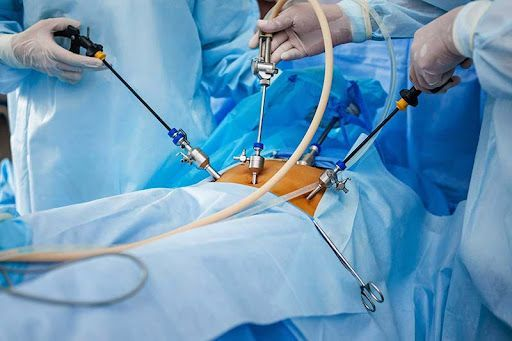
Conditions Treated with Laparoscopic Surgery
- Laparoscopic Nephrectomy — Removal of a kidney that is diseased, non-functioning, or affected by cancer. This includes both radical nephrectomy for kidney tumours and simple nephrectomy for kidneys that have stopped working.
- Laparoscopic Pyeloplasty — Correction of a blockage at the point where the ureter meets the kidney (UPJ obstruction), restoring normal urine flow and protecting kidney function. This is one of the most common reasons children and adults are referred for laparoscopic surgery.
- Laparoscopic Ureterolithotomy — Removal of large, deeply impacted ureteric stones that are too big or too stuck for laser or shock-wave treatment. Smaller and medium stones are usually managed first through non-surgical or laser-based kidney stone treatment in Pune, and laparoscopic removal is reserved for stones that need it.
- Laparoscopic Adrenalectomy — Removal of benign or hormone-producing adrenal gland tumours, with a much faster recovery than open adrenal surgery.
- Laparoscopic Varicocelectomy — Treatment for enlarged veins in the scrotum that cause pain or affect fertility, with a clean, low-scar outcome.
Laparoscopic vs. Open Surgery: What Actually Changes for the Patient
| Factor | Open Surgery | Laparoscopic Surgery |
|---|---|---|
| Incision size | 6–10 inches | 0.5–1 inch (a few small ports) |
| Post-operative pain | Higher | Noticeably lower |
| Hospital stay | 5–7 days | 1–3 days |
| Scarring | Prominent | Minimal, often barely visible |
| Return to normal activity | 4–6 weeks | 1–2 weeks |
| Infection risk | Higher | Lower |
The trade-off is that laparoscopic surgery demands more surgical skill and specific training, since the surgeon works with a two-dimensional camera view and instruments that don’t bend like a human wrist. This is why the experience of the operating surgeon matters as much as the technology itself.
When Should You See a Urologist About Surgery?
Not every urology issue needs surgery, but certain signs are worth getting checked by a urology surgeon in Pune rather than waiting them out:
- Persistent pain in the flank, back, or side that doesn’t settle
- A mass or lump found on a scan, in the kidney or adrenal gland
- Blood in the urine, especially if it recurs
- Repeated urinary infections linked to a structural blockage
- A kidney found to be poorly functioning or non-functioning on imaging
- Swelling or a dragging discomfort in the scrotum (possible varicocele)
If any of these sound familiar, the next step isn’t surgery — it’s a proper diagnostic work-up to see what’s actually going on.
How the Diagnosis Works Before Any Surgery Is Recommended
No laparoscopic procedure is planned without first understanding the exact size, location, and function involved. The usual sequence looks like this:
- Ultrasound (KUB) — A quick, radiation-free first look at the kidneys and urinary tract to check for obstruction or structural changes.
- CT Urography — A detailed scan that maps out any stones, tumours, or blockages precisely enough to plan the surgery around them.
- Renal Function Tests — Blood tests and, where needed, a DTPA or DMSA scan to check how well each kidney is working individually. This often decides whether a kidney can be repaired or needs to be removed.
- MRI — Used selectively for complex adrenal masses or reconstructive cases that need finer soft-tissue detail than a CT can offer.
Only after this picture is complete does it make sense to talk about whether laparoscopic surgery, an open approach, or non-surgical management is the right fit.
Why Patients Choose Laparoscopic Surgery Over Open Surgery
- Smaller cuts, minimal scarring
- Less blood loss during the procedure
- Considerably less pain after surgery
- Shorter hospital stay — typically 1 to 3 days
- Faster return to work and routine life
- Lower risk of wound infection compared to open surgery
What Does Laparoscopic Urology Surgery Cost in Pune?
Cost depends on the specific procedure, its complexity, the type of anesthesia used, and how long the hospital stay ends up being. As a rough guide:
- Laparoscopic pyeloplasty or ureterolithotomy: Moderate cost, including surgery, anesthesia, and a 2–3 day stay.
- Laparoscopic nephrectomy: Higher cost given the complexity, with a typical stay of 3–5 days.
- Laparoscopic adrenalectomy: Higher cost due to the specialized equipment involved, with a 2–4 day stay.
- Laparoscopic varicocelectomy: Comparatively affordable, often done as a day-care or short-stay procedure.
These are general ranges, not fixed quotes — an accurate estimate only comes after reviewing your scans and health history at consultation.
This urology clinic in Pune is open, across Wakad, Baner, and Pimple Saudagar. Share your details below and the team will call to confirm your appointment slot.
Frequently Asked Questions
What is laparoscopic urology surgery, and how is it different from normal surgery?
How much does laparoscopic urology surgery cost in Pune?
Costs vary by procedure — pyeloplasty and ureterolithotomy are moderately priced, nephrectomy and adrenalectomy cost more due to complexity, and varicocelectomy is generally the most affordable. An exact figure depends on your specific case and can only be confirmed after a consultation and scan review.
Is laparoscopic surgery safe, and how long is the r
Yes, it’s a well-established technique performed under general anesthesia with a low complication rate. Most patients are discharged within 1–3 days and are back to light activity within a week, compared to 4–6 weeks of recovery after equivalent open surgery.
Which conditions can be treated with laparoscopic surgery?
Commonly treated conditions include UPJ obstruction (via pyeloplasty), non-functioning or cancerous kidneys (via nephrectomy), large ureteric stones (via ureterolithotomy), adrenal tumours (via adrenalectomy), and varicocele (via varicocelectomy).
Can I get kidney stone treatment without surgery here?
Yes. Smaller and medium-sized kidney stones are usually treated first with medication, hydration, or laser treatment for kidney stones (URS), which doesn’t require any incision. Laparoscopic surgery is reserved for larger, complex, or impacted stones that don’t respond to these options.
What is laparoscopic urology surgery?
Laparoscopic urology surgery is a minimally invasive surgical technique in which specialised instruments and a camera are inserted through small incisions to treat certain urinary and urological conditions.
What urological conditions can be treated with laparoscopic surgery?
Depending on the condition, laparoscopic surgery may be used for kidney, ureter, adrenal gland, and other urological procedures.
What are the benefits of laparoscopic urology surgery?
Potential benefits include smaller incisions, less postoperative pain, reduced blood loss, shorter hospital stays, and faster recovery compared with some traditional open procedures.
How long does laparoscopic urology surgery take?
The duration varies depending on the type and complexity of the procedure. Your surgeon can provide an estimated operating time after evaluating your condition.
Will laparoscopic surgery leave scars?
Laparoscopic surgery uses small incisions, so the resulting scars are generally smaller than those from traditional open surgery.
