
Prostate Enlargement Treatment
Dr. Rajesh Dhake > Prostate Surgery
Why Prostate Surgery Is Performed
Prostate enlargement is a common condition in men, particularly after the age of 50. It is medically known as Benign Prostatic Hyperplasia (BPH). The prostate gland is located below the urinary bladder and surrounds part of the urethra. As the prostate grows, it can narrow the urinary passage and make it difficult for urine to flow normally.
Prostate enlargement is not the same as prostate cancer. However, if urinary symptoms are ignored, progressive obstruction can affect bladder function and, in severe cases, lead to urinary retention, recurrent infections or problems affecting the kidneys.
Treatment depends on the severity of symptoms, prostate size, urinary obstruction and the patient’s overall health. Depending on the condition, treatment may include lifestyle changes, medicines, minimally invasive procedures or prostate surgery.
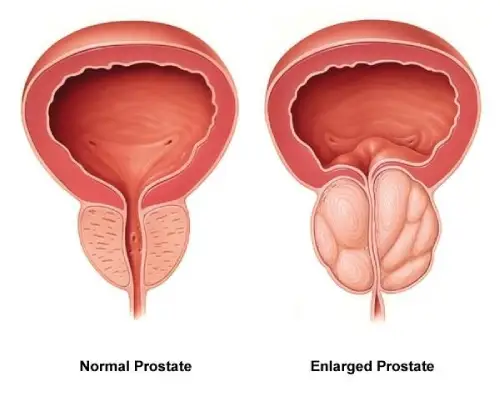
Symptoms of Prostate Enlargement
Common symptoms include:
- Difficulty starting urination
- Weak or slow urine stream
- Interrupted urine flow
- Frequent urination during the day
- Increased urgency to urinate
- Frequent urination at night
- Feeling that the bladder has not emptied completely
- Straining while passing urine
- Dribbling after urination
- Difficulty or inability to pass urine in severe cases
Persistent urinary symptoms should not simply be considered a normal part of ageing. A urological evaluation can help determine the underlying cause.
Types and Degrees of Prostate Enlargement
Prostate enlargement can vary from mild changes with minimal symptoms to significant enlargement that causes urinary obstruction. The severity of symptoms does not always correspond directly to the size of the prostate.
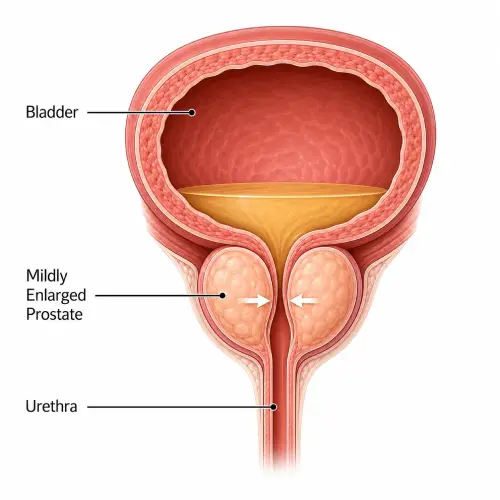
Benign Prostatic Hyperplasia (BPH)
Benign Prostatic Hyperplasia, commonly known as BPH, is the most common cause of prostate enlargement in ageing men. It is a non-cancerous growth of prostate tissue that can gradually narrow the urethra and affect normal urine flow.
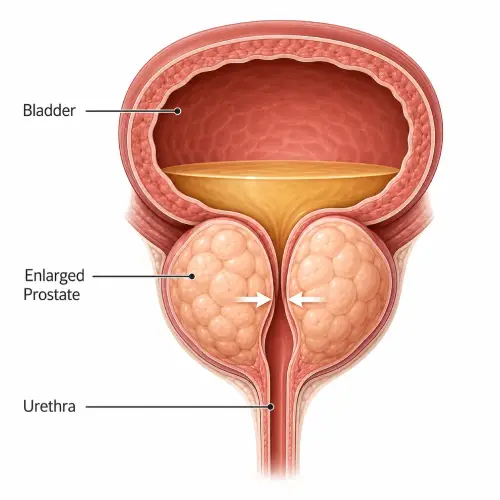
Mild Prostate Enlargement
Mild enlargement may cause few or no noticeable symptoms. Some men may experience a slightly weaker urine stream, occasional increased urinary frequency or mild difficulty starting urination. Depending on the symptoms, regular monitoring or medical treatment may be recommended.
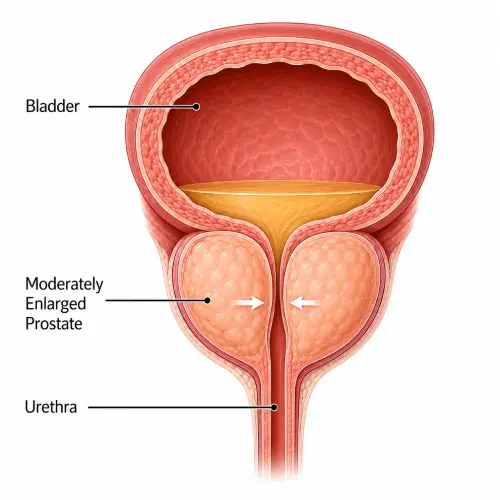
Moderate Prostate Enlargement
As prostate enlargement progresses, urinary symptoms may become more noticeable. Men may experience frequent urination, increased urgency, waking several times at night to urinate, a weak urine stream or difficulty starting urination.
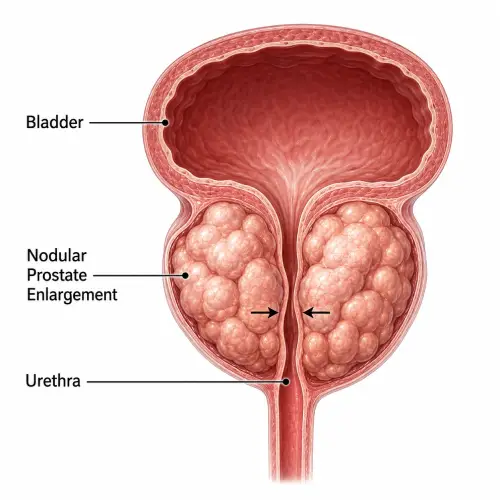
Severe Prostate Enlargement
Severe enlargement can cause significant urinary obstruction and difficulty emptying the bladder. In some cases, it may be associated with urinary retention, recurrent urinary tract infections, bladder stones or changes in kidney function.
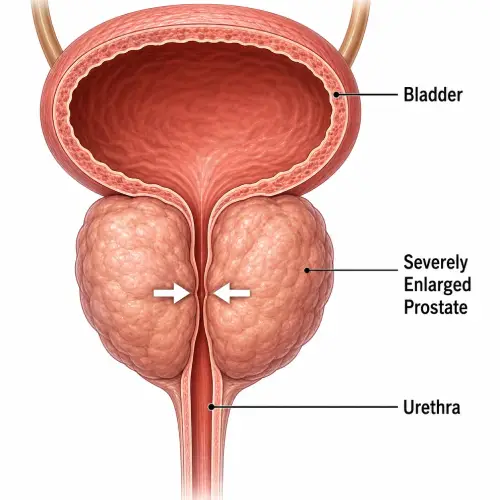
Nodular Enlargement of the Prostate
BPH develops through the growth of prostate tissue and may involve the formation of nodules within the gland. Depending on their location and size, these areas of tissue growth can contribute to narrowing of the urinary passage and cause urinary symptoms.
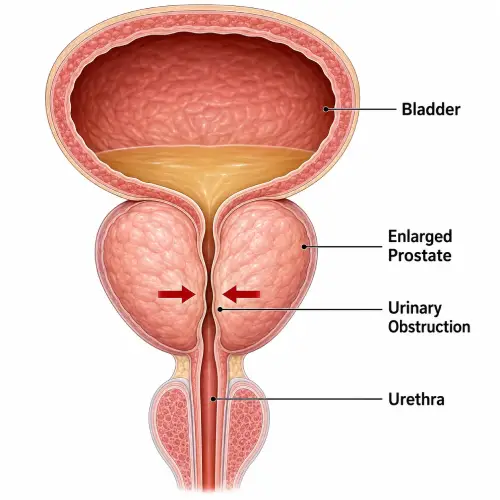
Enlarged Prostate with Urinary Obstruction
When prostate tissue significantly narrows the urethra, urine flow from the bladder may become obstructed. Patients may experience a weak or interrupted stream, straining while urinating, prolonged urination and a feeling that the bladder has not emptied completely.
Causes of Prostate Enlargement
The exact cause of prostate enlargement is not completely understood. Age-related changes in male hormones are believed to play an important role in prostate growth.
The risk of BPH increases with age. Family history and certain health and lifestyle factors may also be associated with an increased risk of developing prostate enlargement.
How Is Prostate Enlargement Diagnosed?
A proper diagnosis is important because urinary symptoms can also occur due to urinary tract infections, bladder problems, urethral narrowing and other prostate conditions.
Depending on the symptoms, a urologist may recommend:
Medical History and Physical Examination
The doctor evaluates urinary symptoms, their duration and their effect on daily activities and sleep. A digital rectal examination may also be performed to assess the prostate.
Urine Test
A urine examination can help identify infection, blood in the urine and other abnormalities that may contribute to urinary symptoms.
PSA Blood Test
A prostate-specific antigen (PSA) test may be recommended based on age, symptoms, medical history and individual risk factors. PSA results need to be interpreted along with other clinical findings.
Ultrasound
Ultrasound can help assess prostate size, bladder condition and the amount of urine remaining in the bladder after urination.
Uroflowmetry
Uroflowmetry measures urine flow rate and can provide useful information about possible urinary obstruction.
Prostate Enlargement Treatment Options
The appropriate treatment depends on the severity of symptoms, prostate size, urinary obstruction, bladder function and the patient’s overall health.
Lifestyle Changes and Monitoring
Men with mild symptoms may be managed with regular monitoring and lifestyle measures. These may include reducing excessive fluid intake before bedtime, limiting caffeine and alcohol, maintaining physical activity and reviewing medicines that may worsen urinary symptoms.
Medicines for Enlarged Prostate
Medicines may be recommended when urinary symptoms affect daily life. Depending on the patient’s condition, medicines may relax the muscles around the prostate and bladder neck to improve urine flow or help reduce prostate size over time.
The choice of medication depends on the patient’s symptoms, prostate size, other medical conditions and response to treatment.
Surgical Treatment for Prostate Enlargement
TURP – Transurethral Resection of the Prostate
TURP is an established procedure for treating urinary obstruction caused by an enlarged prostate. A specialised instrument is passed through the urethra, allowing obstructing prostate tissue to be removed and urine flow to improve.
Laser Treatment for Enlarged Prostate
Laser prostate procedures use laser energy to remove or vaporise prostate tissue that is blocking the urinary passage. Different laser techniques may be considered depending on prostate size and the patient’s individual condition.
HoLEP – Holmium Laser Enucleation of the Prostate
HoLEP is a minimally invasive laser procedure used to treat urinary obstruction caused by prostate enlargement. The obstructing prostate tissue is separated from the surrounding prostate and removed through the urinary passage.
HoLEP can be considered for different prostate sizes, including significantly enlarged prostates, when clinically appropriate.
When Is Prostate Surgery Required?
Prostate surgery may be recommended in cases of:
- Persistent or worsening urinary symptoms
- Repeated urinary retention
- Significant urinary obstruction
- Recurrent urinary tract infections
- Bladder stones associated with prostate enlargement
- Significant urine remaining in the bladder
- Symptoms that do not improve adequately with medicines
- Complications affecting the urinary tract or kidneys
The appropriate procedure is selected after evaluating prostate size, symptoms, urinary flow, bladder function and overall health.
What Happens If Prostate Enlargement Is Left Untreated?
Mild prostate enlargement may remain stable for some time, but progressive obstruction can affect bladder emptying.
Severe or untreated obstruction may lead to urinary retention, recurrent urinary infections, bladder stones, bladder muscle changes and, in some cases, deterioration of kidney function.
Early evaluation can help identify the severity of obstruction and allow appropriate treatment before complications develop.
Can Prostate Enlargement Be Prevented?
There is no guaranteed method to prevent age-related prostate enlargement. However, maintaining a healthy weight, staying physically active, following a balanced diet and seeking medical advice when urinary symptoms appear can support overall urinary health.
Men with persistent or worsening urinary symptoms should undergo appropriate evaluation rather than assuming the symptoms are simply a part of ageing.
When Should You See a Urologist?
A urological evaluation is recommended if you experience a weak urine stream, difficulty starting urination, frequent nighttime urination, urgency, incomplete bladder emptying or persistent changes in your urinary pattern.
Sudden inability to pass urine is an urgent condition and requires immediate medical attention.
Frequently Asked Questions
What is prostate enlargement?
Prostate enlargement, commonly caused by Benign Prostatic Hyperplasia (BPH), is a non-cancerous increase in the size of the prostate that can narrow the urinary passage and affect urine flow.
Does every enlarged prostate require surgery?
No. Treatment depends on symptoms and their severity. Mild cases may be managed with monitoring and lifestyle changes, while medicines or procedures may be recommended when symptoms are more significant.
What is the best treatment for an enlarged prostate?
There is no single treatment suitable for every patient. Medicines, TURP and laser procedures such as HoLEP may be considered depending on prostate size, urinary symptoms, obstruction and overall health.
Can an enlarged prostate cause urinary retention?
Yes. Significant obstruction can make it difficult or impossible to empty the bladder. Sudden inability to pass urine requires urgent medical treatment.
Is prostate enlargement the same as prostate cancer?
No. BPH is a non-cancerous enlargement of the prostate. However, urinary symptoms can have several causes, so proper evaluation is important to identify the underlying condition.
When should I consult a doctor for prostate enlargement?
You should consult a urologist if urinary symptoms disturb your daily life, sleep, work, or comfort. Dr. Sunil Mhaske may suggest tests to understand the prostate size, urine flow, and bladder condition before planning treatment.
Is prostate enlargement the same as prostate cancer?
No, prostate enlargement is usually non-cancerous. However, some urinary symptoms can look similar to other prostate problems, so proper diagnosis by a urologist is important.
What are the common symptoms of prostate enlargement?
Common symptoms include frequent urination, waking up at night to pass urine, weak urine stream, urgency, difficulty starting urination, dribbling, and feeling that the bladder is not fully empty.
Can prostate enlargement be treated without surgery?
Yes, many cases can be managed with lifestyle changes and medicines. Treatment depends on symptom severity, prostate size, age, health condition, and test results.
